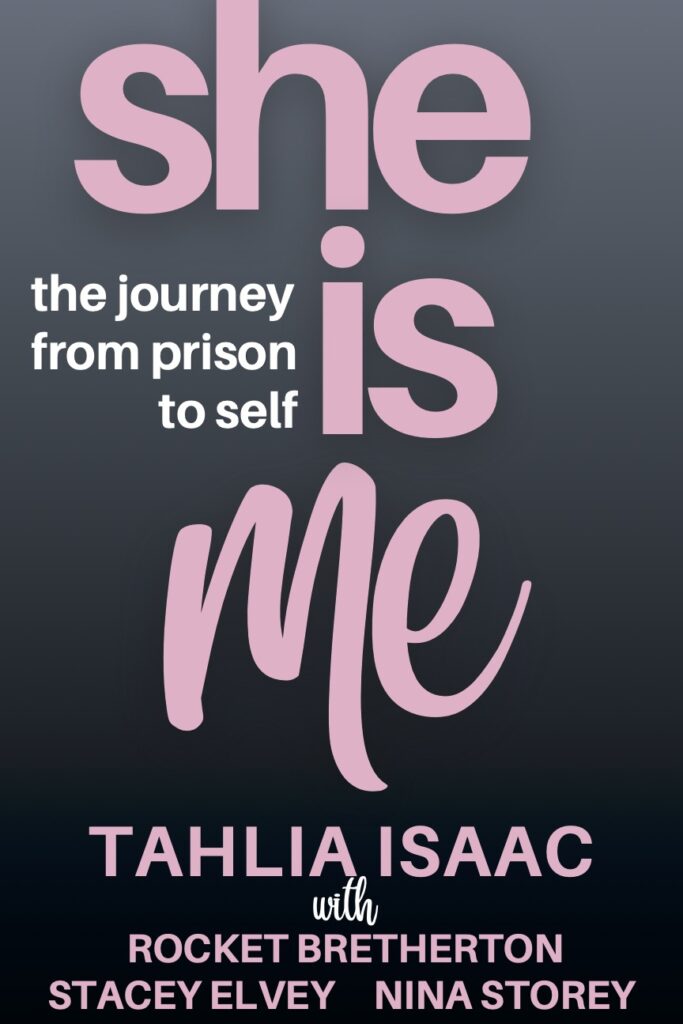

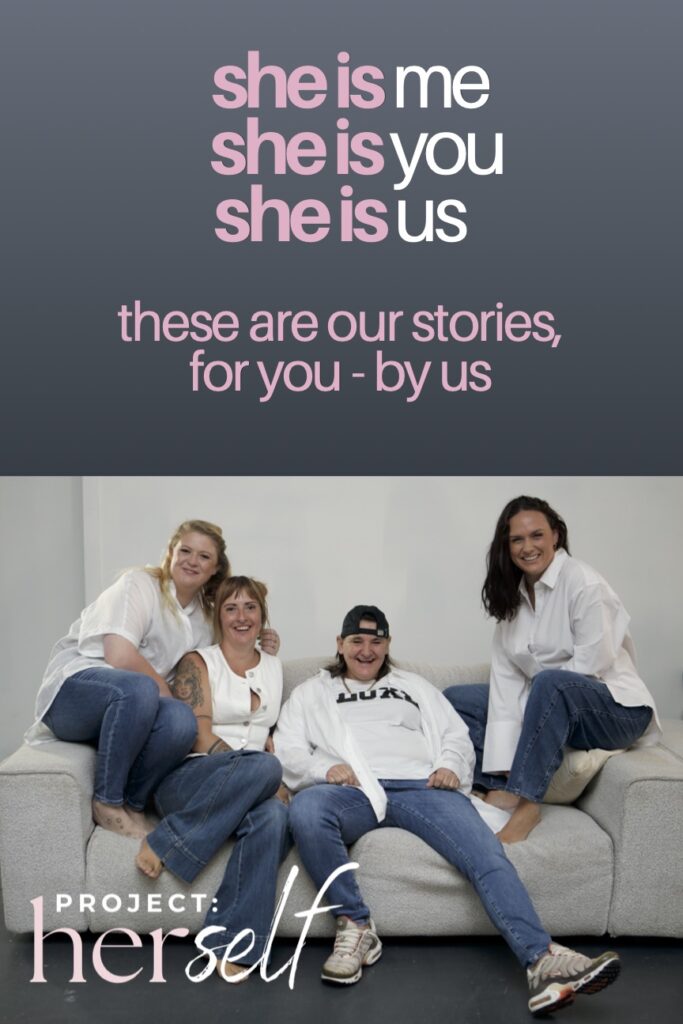
This is an extract from the book, ‘She Is Me’ by Tahlia Isaac – with Rocket Bretherton, Nina Storey and Stacey Elvey. Published by Project:herSELF, out March 4.
I have a deep connection to storytelling, to hearing what other women who have been in prison tell me and how they see the world. In compiling this book, at the front of my mind, always, has been a desire to elevate women’s voices, our experiences and the stories that led us to prison. And, most importantly, how we found our way out. My hope is to highlight the choices that weren’t really choices at all, to make human the experience of addiction and incarceration.
When I ask the women I work with who they are now, to describe themselves, they each have varying degrees of difficulty answering the question. ‘Who am I?’ they laugh nervously. ‘I don’t know. Fuck, I’m still trying to figure it out.’
The more I press, the more they reveal. ‘I’m a mum who loves her kids.’ ‘I’m a grandmother, an aunty and I’m a good person.’ ‘I care about people and I want to make this world a better place, because I have done my fair share of taking from it.’ ‘I am kind, I am honest and I am hardworking. I have made mistakes for sure, but I have also seen things no kid should ever see.’
What I know about them is this: They are storytellers, they are visual storytellers, they are knowledge-holders, about a world not too many people get access to – drugs, crime and prison. They are knowledge-holders of the problem, yes, of the inner workings of these worlds, but more importantly, they are knowledge-holders of the solutions. They are women who have led, who have carved out initiatives inside prison walls; they are women who have changed things, sometimes in the smallest of ways, but have managed to make the world a little less shit for the women still trapped inside.
They are women still finding out who they are, what they are good at, what kind of lovers they will be after past relationships took everything from them; they are finding out what they can survive in this world after a life living in survival in another world; they are figuring out what ‘normal’ people do with their days, where they find joy, laughter and connection.
I ask each woman I sit with, ‘Where does your story start?’ And I’m saddened to learn that most of them have been robbed of a childhood.
‘I was 13 when my neighbour gave me my first shot of heroin,’ Kat* tells me. ‘I was running away from a less-than-ideal home life with lots of violence; I was homeless and living on the streets of Kings Cross using any drug I could get my hands on.’
I can’t even imagine the horrors that Kat saw, experienced or did, to survive on the streets at 13.
Stories of stolen childhoods turn into stories of survival in adulthood. I have compiled these stories so you may come to understand what leads women to prison, what we can do to create a better world for the next generation of women and how we can make sure it includes all of us.
The stories in these pages have been many things: raw, painful, defiant, tender, and brave. Each one has carried a strand of truth about what it means to be human, and what it costs when society forgets its own promises. When we set out to write this book, it was never about pity, spectacle or redemption. It was about honesty. It was about pulling back the curtain on what so many already know in their souls: that our lives are not lived in isolation, and that when the weave of our social fabric tears, we all feel the fray.
We have heard how intersecting factors – drugs, isolation, violence, emotional dysregulation, poverty and identity – can really take hold of us and drive us into lives that don’t feel like our own. Through the pain, the hurt and the heartache – we find moments of love, happiness; of childhood memories like brothers, Fat Bottom (Rocket’s childhood teddy) and collective care from community, because this life is all of those things. There can be no light without the dark and no understanding of freedom without understanding what losing it all is really like. If you have got this far in the book, then you must by now understand how obvious the solutions to these problems seem.
And so, it begs the questions: What are we doing to fix it? And, what’s the path forward?
In all the stories you have read in this book, and in most of the stories that formerly incarcerated women, women with conviction histories and criminalised women hold, therein lies a theme: the causal factors that shaped their trajectory into crime and prison, and those that later pulled them away from that path and towards freedom. These factors have been studied for many decades, written about and discussed, mostly in the inaccessible and sometimes unreadable world of academia. The common themes that lead people to crime are often called the ‘social determinants of offending’. The themes that pull people to freedom can mostly be attributed to ‘protective factors’. We will discuss both of these terms in this final chapter. Underpinning it all is the concept of the ‘social contract’, and that, my dear friends, is how we pull ourselves from this mess we find ourselves in.
You might be thinking what mess? Or you might know exactly what I mean. Right now in Australia there are 3,500 women in prison. We are the fastest growing prison population in the country. First Nations women are imprisoned at 22 times the rate of non-Indigenous women, and the impacts are far-reaching beyond just our spend on justice and prisons – which is billions per year. Incarcerating women means taking primary caregivers from their role in the home and community, impacting children and creating a generation of kids who may continue the same cycles. It drives poverty deeper in most instances, meaning reliance on welfare systems, public housing and social services is stretched beyond capacity. Prison interrupts employment, meaning our economy becomes unstable. The cost of incarceration is around $450 a day per person, depending on what state you live in, and it’s upwards of $150,000 a year. Almost every woman in prison (98%) has a history of surviving abuse, violence or sexual assault, with no access to therapeutic support to heal from that experience. The worst part is that almost half of the women in prison have some form of mental health condition, which goes untreated in most cases and becomes so acute in many that it takes years to undo their reliance on medication and the health care system – if they recover at all.
None of these factors excuse the harms that some of us have done. This book does not exist to dismiss the harm victims of crime have experienced. In everything we do there needs to be personal accountability for the actions each of us decides to take. We have certainly been held accountable, long after we have served our time. The question really is – what happens when those choices are made from a place of survival, because the foundations needed to live a positive life have been denied or neglected by the very systems that we entrust to provide them? What about the misidentification and criminalisation of victim survivors, by systems deeply inept at understanding cultural nuance? And what happens when systems swallow up people who don’t pose a risk to our society, and turn them into hardened disengaged members of the community who do eventually cause harm? The truth is that prisons aren’t solving crime, they just warehouse those accused of crime.
The justice space is full of noise; it can be confusing to understand where you sit on the spectrum of abolition or reform. I have sat with these two concepts for some time. trying to understand where I sit, why I feel that way, and often questioning my own humanity. Abolitionists call to defund police, close prisons and create community care; at times it seems radical, impossible even. Reform sits closer understanding these systems exist and the web is so complex that undoing entire systems of justice may not be possible, however we can change them in ways that do less harm to those tangled in the web. Each side would have you believe that the other is not possible. With each call to action it may seem to get so complicated that people just default to ignorance unless it directly impacts them. We turn away from the human toll: children, women, mob, refugees. The systems that do the most harm to these groups are often those too complicated for people to truly have an opinion on.
But here is the thing – two things can be true at once. We can want to feel safe and want fewer people to be in prison. We can condemn the treatment of people in prison and still acknowledge the role of prisons in society.