


Dearest Gentle Readers,
With the newest season of Bridgerton fast approaching, I couldn’t help but notice the uptick in conversations about a certain plot twist involving one Francesca Bridgerton at the end of the third season.
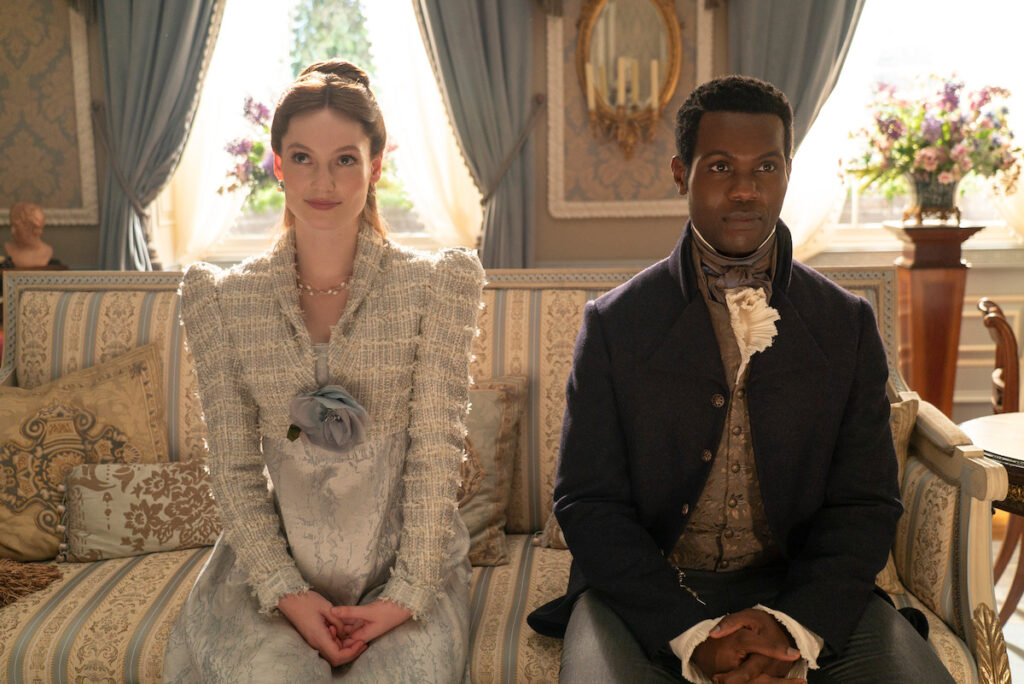
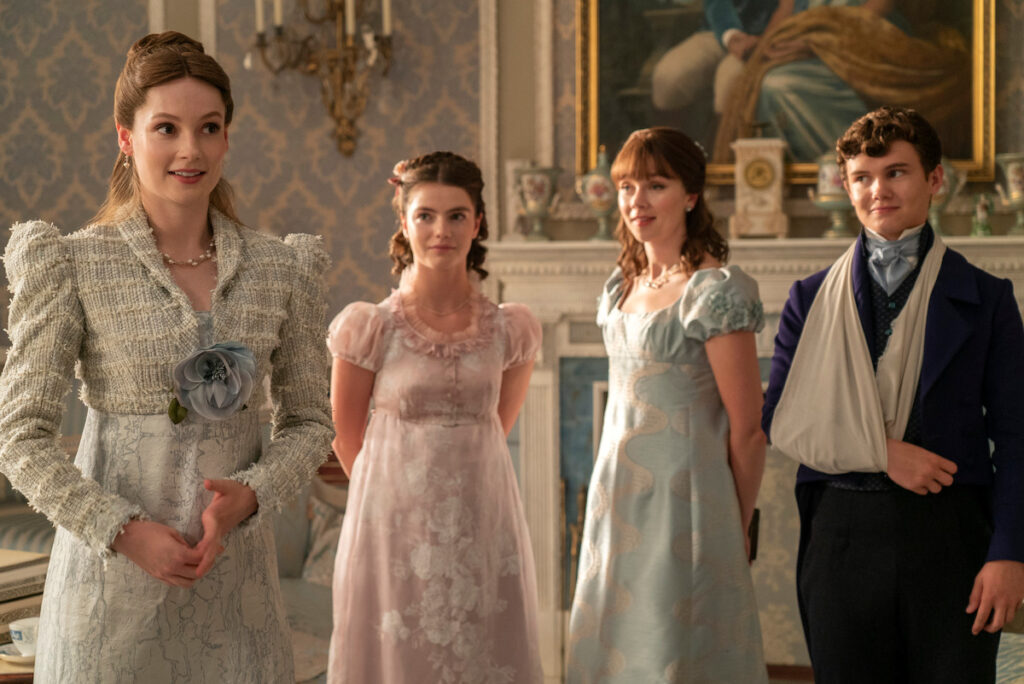
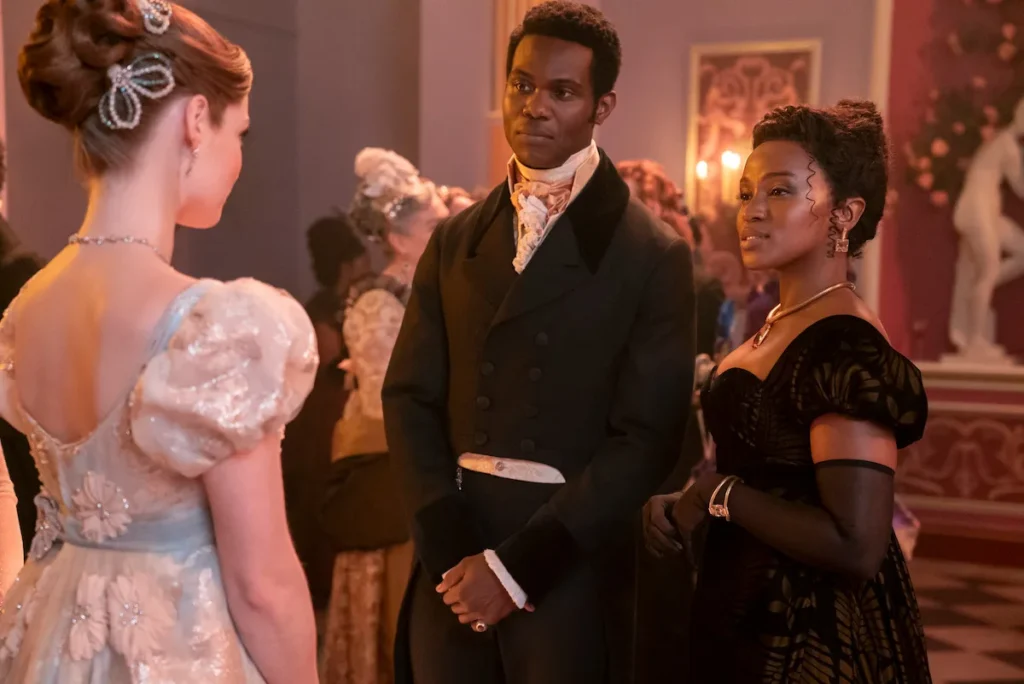
For context, Francesca is the sixth Bridgerton child, and is rather reserved and timid. Last season, she seemingly met her match in John Stirling, a man who she can sit in silence with, and brings her immense comfort. Book readers were already preemptively mourning John, seeing as he passes away rather suddenly. This set up Francesca’s love story from her book, where she falls in love with John’s cousin, Michael Sterling.
Fans for the most part adore this plot line. And then the show pulled the rug out from under their viewers by changing Michael to Michaela, and thus ignited much chatter in the fandom for the past two years while we’ve been awaiting season four.
The outrage online was instantaneous, with people decrying how it “isn’t period accurate” (as if the girls don’t have acrylic nails, and they live in a liberal escapist alternate version of the regency era where racism hardly exists). Other fans were mad that they now feel as if Francesca’s storyline struggling with infertility is going to be removed from the show. And crucially, many are mad at how early Francesca’s attraction to Michaela is evident, because they believe it somehow lessens her love story with John.
And yet somehow when everyone and their mother was making edits of Eloise and Cressida to Good Luck Babe, these same fans didn’t bat an eye. The same people who were hopeful that Sophie would be changed to a man for canonically bisexual Benedict. They were thrilled at the mere prospect of a queer Eloise, and ditching her book with Phillip Crane.
Eloise is the “feminist” sibling. Eloise is “mouthy”. Eloise is “queer coded”.
But has it ever occurred to people that perhaps the queer female representation that we need to see more of is not with the characters that people would most expect?
We have seen many stories of the brash and progressive female characters who detest romance and love and then end up realising their queer identity, with this being common in real life as well (saying this as a mouthy asexual who fits into the mould rather well). It is rarer to see a queer woman similar to Francesca in the media. The ones who even in 2025 would shock people if they knew that they were queer. But may I remind you that Francesca, similarly to Eloise, has no interest in romance or men for much of the series, up until meeting a man who wouldn’t talk to her, and then she was sold! So when people say “they made the straightest girl in the ton gay”, what they really mean is “you made a feminine woman gay”.
And I believe it to be rather interesting that the love interest that so many have taken umbrage with is a queer dark-skinned Black woman. The misogynoir never ends folks!
In a day and age where queer people’s rights are being stripped away, where political figures are demonising trans people, where Black folk are being unjustly murdered. In a world where women are having their bodily autonomy being taken from them, I am thrilled that Netflix’s seventh biggest show of all time is exploring an unexpected interracial queer relationship.
I also firmly believe that if the writers choose to portray Eloise as straight, then that is a great thing! Not every single woman in the literary and screen cannon who is defiant of society’s patriarchal rules needs to be queer. You can be a feminist, and be straight, and that is perfectly okay to show on screen. And this feels like disguised misogyny saying that because Eloise is a feminist, she must be a lesbian as well. This feels like a talking point from some douchey frat bro.
And look, I do understand as an avid book reader why you would be nervous about the changes. Trust me, I am often a massive critic of changes from book to screen. But to me, Bridgerton as a TV show is a different entity, given all of the many changes made in the adaptation process. And at the end of the day, how much is really going to be different in their story with it now being genderbent? The main difference to me is that queer viewers of the show are going to feel themselves represented in a way that is rare for both period pieces and from media more generally, especially given the entertainment industry’s penchant for ending most shows, with lesbians central to the plot, after their first season (justice for First Kill and A League of Their Own).
And yes, I think that the storyline about infertility is of great importance, I feel confident that they will find a way of covering it in a different way with Francesca (perhaps while John is still alive, they explore this as a plot?).
Shows centring queer men are all the rage (yes, I’m talking about you, Heated Rivalry), and even shows with queer women who fit the mould (see Pluribus), and yet it is very rare to see representation for queer women who are not “stereotypically queer” (whatever the fuck that means!). And I just know in my heart that many of the people who are complaining about Francesca being queer are the same girls who are fangirling over Heated Rivalry, and loved Benedict being depicted as bisexual because it is okay for men to be queer, but the same cannot be said for women.
Plot accuracy seems to only be important to the fans of Bridgerton when policing queer women, and I am utterly sick of it.
Bridgerton Season 4 premieres on Netflix in two parts. Part 1 drops on January 29 & Part 2 on February 26.
Top photo source: Photo: Liam Daniel/Netflix