


As we enter the second half of the year, Booksmart’s Sunny Adcock and Allie Daisy King are back with their July book club: Muñeca by author Cynthia Gómez.
The short novel comes in at under 200 pages, but nonetheless provides plenty of captivating twists and turns to grip readers.
It’s set in 1968 Oakland, where we find protagonist Natalie Fuentes, a queer, Latine, working class witch who sets out to rescue Violeta Miramontes. Violeta is a young bespelled heiress to Spanish colonial wealth, who’s been left paralysed by a rather mysterious illness. Could it be the result of dark magic, and if so, who’s the culprit?
The story follows the events that come after Natalie becomes Violeta’s caretaker… and let’s just say, it promises a Gothic queer love story featuring witchcraft and revenge.
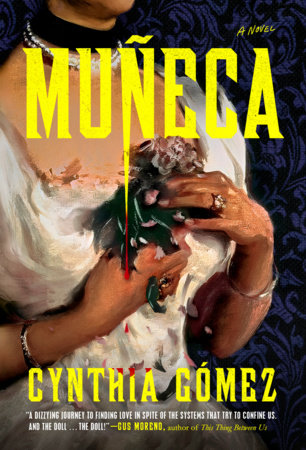
One of the first things that Sunny and Allie delve into in their discussion around Muñeca is the choice of cover art, with Sunny explaining it was one of the major drawcards to picking this read up in the first place.
“I suggested this book, I put it forward. In all honesty, the striking cover is what got me first,” Sunny tells Allie, adding there were strong visual elements that not only pull you in, but also leave room for imagination.
“It’s this beautiful Gothic portrait of a woman in a white, very classically Gothic dress, and she’s holding in her hands… I think it’s like a bouquet of flowers,” she says, to which Allie adds, “It’s floral”.
The cover and the genre go hand-in-hand. “The girl on the cover has chokers and pearls on and bracelets… it’s really giving gothic,” says Sunny. “It is a queer love story, and it is set in the 1960s, and so I was so excited.”
“It’s witchy! We love lesbian witches. We’re both big Buffy the Vampire Slayer fans,” Allie responds.
Of course, you can’t merely judge a book by its cover, and as Sunny and Allie explore the narrative further, a big talking point is the time in which the book is set. Allie explains that certain aspects don’t seem to align with what’s meant to be a gothic story. Rather than being set in the 1960s, she suggests the “Victorian era” would have made the plot more plausible.
“Yeah, that would have helped facilitate the sort of gothic ambiance and theme that the book is said to have,” agrees Sunny.
“I feel like you can’t really be gothic when you have electricity,” says Allie, to which Sunny adds, “When things are candlelit”.
Having said that, Sunny notes that the aspect of a queer love story is fitting for the 1960s, given the often widespread conservative societal views about identity during that decade.
“I would say that I understand that 1960 was a way to sort of orient Natalia and Violetta, but specifically Natalia and Doris (whom Natalia lives with) in a time where queer love obviously had to happen sort of underground and behind the scenes,” she explains. “And it was very hush, hush in the shadows… you know, word of mouth. Also when dance and music was a means of subculture, and radical expression and rebellion in a way.
“Obviously, there was a lot of unionist sentiments there. This idea of like marginalised communities still being affected by marginalisation, trying to integrate into contemporary American society – those themes were quite specific to the 1960s, but also did exist in the past and in the future.”
“I do think that the story – because of those elements – could honestly be told in the modern day setting though, because these things are still very awfully prevalent in this day and age, but then also could have been told 100 years before when it was,” Allie adds.
Of course, there’s lots more that’s unpacked in this Booksmart episode, as Allie and Sunny delve into the power imbalances present in this book, from body-swapping to patient x carer romances in fiction, with plenty of laughs along the way. So grab your headphones, sit back and enjoy the ep here (or below)!