


CW: Discussion of mental health and suicide.
Note: Spoilers ahead for Yulin Kuang’s ‘How To End A Love Story’. Whether it’s on BookTok or at in-person events, one of the most talked-about concepts in the book world over the past few years is adaptations brought to life on screen. Netflix recently saw immense success through the book to screen adaptation of Emily Henry’s 2021 novel, People We Meet On Vacation.
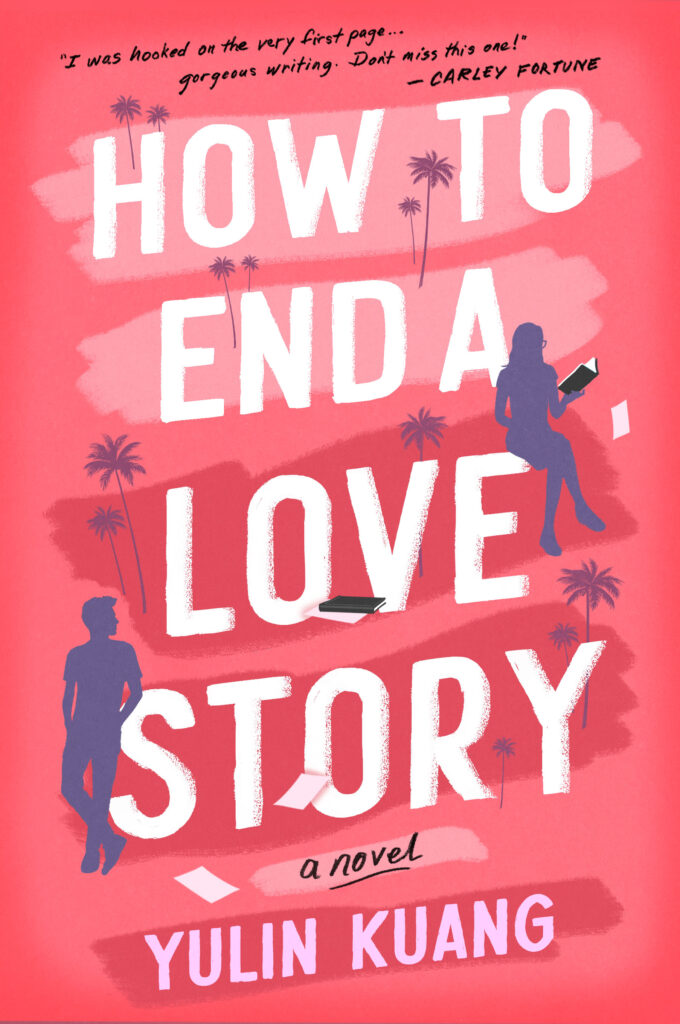
One of the screenwriters behind the film is Yulin Kuang, who has also penned her own novel, How To End A Love Story. While the book may have been released in 2024, Booksmart hosts Sunny Adcock and Allie Daisy King decided now’s as great a time as ever to sit down and explore Kuang’s captivating writing style, and the various themes she explores including trauma bonds, pretty privilege and love.
“People either really love and like, ride for this book, or they hate it and find it… convoluted and a really odd premise for a love story,” says Allie. “Which is kind of, I think, why I love it so much”.
Speaking of the love story in question, the novel follows what happens when two people linked by a shared tragedy – Helen Zhang, a bestselling author, and Grant Shepard, a screenwriter – are thrown together on from a tragedy in high school involving the death of Helen’s little sister , only to discover a spark between them that, wait for it… complicates everything.
“This is more than a romance,” reflects Sunny. “Not that a book needs to be more than a romance, because we’re pro that here, and there’s no need to justify it. But what I love is that this book is actually about trauma and grief and loss and rebuilding yourself in the wake of that. It’s about career and ambition. It’s about generational trauma. It’s about being a child of immigrants. I just think it’s so rich.”
And how about “pretty privilege” as Allie cheekily suggests? “Yes, I guess, readers let us know what you think – is Grant ahead of his career because of pretty privilege?” Sunny asks. “I guess he is, but I think he’s also charming, which is something Helen isn’t.”
Not all novels, and especially romance ones, dare to delve into sociopolitical issues. However, How To End A Love Story does that, and “does that really well” according to Allie.
“I think that this book does that really well, which is definitely in part because Yulin is a woman of colour – which is not a very common thing in the romance space for women who get such high-profile books… because it is definitely a space where whiteness is upheld,” she explains.
“And such high-profile debuts as well,” adds Sunny. “This is her first novel.”
As readers make their way through the pages, they’ll also see the different ways in which a tragedy from 13 years ago impacts Helen and Grant differently. The incident was when Helen’s sister Michelle ran in front of a car Grant was driving, therefore bringing the exploration of suicide and mental health into the realm.
“It makes sense that this huge tension would exist between Helen and Grant, because they can only look at each other and see their worst day reflected back at them,” says Sunny. “But at the same time, they’re the only people that could possibly understand what it is they went through.”
Of course, the impact reaches both families, with Allie reflecting: “The fact that her parents will never really get on board with the relationship, I get it.
“That would be so immensely triggering to have the person that was, like not responsible, but a part of your daughter’s death… that’d be horrible to sit across the Thanksgiving table and see them.
“I know that Helen can more or less get past it and view him in a different light and in a more sympathetic light,” Allie continues, to which Sunny adds, “Unfortunately, that’s kind of just Grant’s cross to bear. It’s not fair, but it’s just the way that it is”.
This book embraces the messy and raw aftermath for both characters, but also touches on beautiful, lighter moments too as they navigate family, career and of course, their strong connection.
“I didn’t love the ending, which is crazy, because it’s called How To End A Love Story,” says Sunny. “And that’s why it was a 4 star and not a 5 star [rating].”
As Allie agrees that the ending was “not great”, Sunny does promise us in the last 10 seconds of this episode that the book is worth reading still, because, as she puts it; “the journey… boom!”
If you or anyone you know requires confidential support, call Lifeline on 13 11 14 or Beyond Blue.