


I grew up learning how to fit in. As a Tamil Sri Lankan woman raised in Australia, that often meant adapting to a culture shaped by whiteness, colonialism and patriarchy. It showed up in how I dressed, how I carried myself, how much space I took up. At the same time, I was being raised within a rich cultural and spiritual lineage that did not always feel reflected in the world around me.
From the ages of 5 to 16, I trained in Bharatanatyam, one of India’s classical dance forms. At the time, I did not always feel fully expressed in it. It was structured and disciplined, much like my upbringing. Like many second-generation children, I eventually drifted away from the practice. Access, community and a sense of belonging all played a role.
Looking back, I can see that stepping away from Bharatanatyam was also part of a broader process of assimilation.
My parents migrated to Australia from Sri Lanka during a civil war marked by violence, oppression and genocide. Survival shaped many of their decisions. For my generation, that translated into an unspoken understanding to succeed within the systems we were placed in. I was not taught to question those systems.
As I grew older, I began to notice the gaps in the cages. I entered yoga and wellness spaces where practices from my own lineage were being shared, yet South Asian teachers were often missing from the centre of those spaces. The philosophy felt familiar, but the way it was taught sometimes felt disconnected from its roots. There was a lack of acknowledgement, a lack of depth and at times a lack of cultural accountability.
For a long time, this created a quiet dissonance. I experienced imposter syndrome within practices that I had grown up around. I questioned my place in spaces that should have felt like my own.
The inclusivity narrative is usually about inviting more diverse voices in. But it is actually about reclaiming space that has always belonged to our communities. That being said, people in positions of power have a crucial role in actively inviting BIPOC practitioners in and meaningfully platforming their voices.
Living in this country as a brown woman has always felt political. My work as an artist, dancer and yoga teacher is shaped by that reality. Through movement, I explore what it means to carry stories of migration, loss, resilience and survival in the body. I also explore joy, sensuality and connection, which are just as much a part of our cultural inheritance.
Over time, my practice has expanded into a range of forms including liquid fusion bellydance, pole, fire dancing, dancehall and Afro styles. These forms, like Bharatanatyam, are deeply rooted in culture and community. Moving through them has allowed me to see connections across diasporic practices and to understand movement as a shared language of expression and resistance.
Recently, I returned to Bharatanatyam after a 16-year hiatus.
This return did not come from obligation but from a desire to reconnect. Walking back into the practice felt different this time. There was more agency, more curiosity and more space to question and reinterpret.
Being welcomed back into the form through community spaces like Karma Dance has been a huge part of that journey. Their work, alongside productions like Temple of Desire, reflects a wider shift happening across South Asian artistic communities. There is a deep respect for tradition, but also a willingness to expand it. These spaces are reimagining what classical forms can hold, bringing in contemporary influences, storytelling and lived experiences that have often been excluded. They are not discarding tradition, but allowing it to breathe, evolve and speak to this moment.
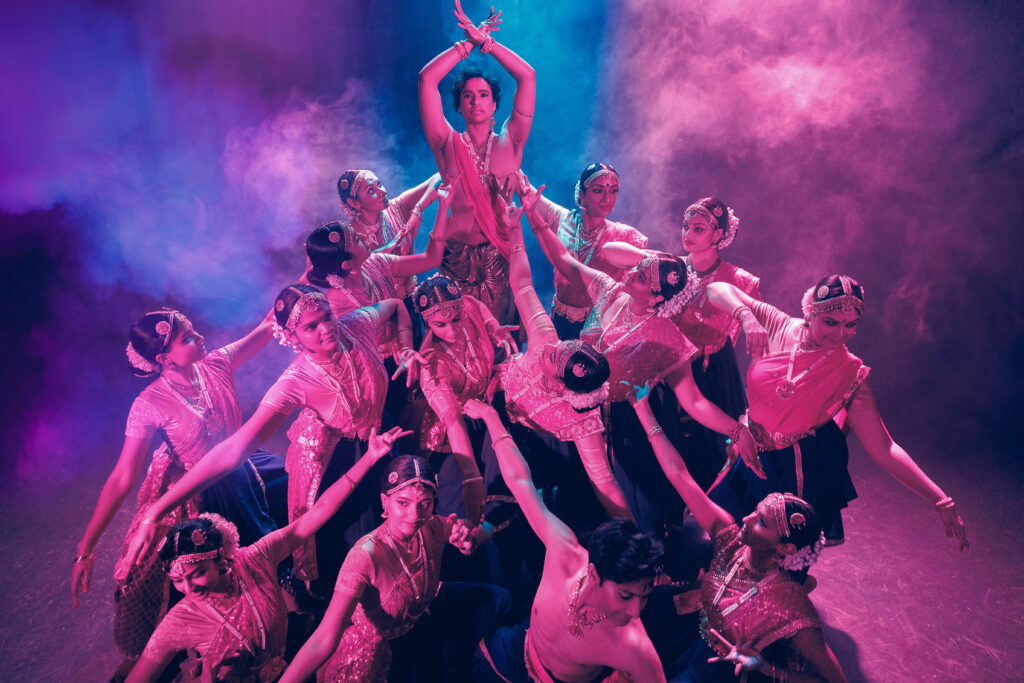
Bharatanatyam itself has always held complexity. Historically performed by Devadasis, who were ancient temple dancers and artists modelling devotion, storytelling, and connection to eros and the divine, the form was once deeply intertwined with spiritual and communal life. Colonisation led to the degradation of these once revered and honoured practitioners.
What feels important now is not simply preserving the form but engaging with it honestly.
As a queer woman, this is especially significant. Queerness has long existed within Hindu stories and cosmology, yet in many contemporary South Asian communities it is shunned. To exist within this form as a queer person is both an act of expression and an act of remembering.
For me, returning to Bharatanatyam, and continuing to move across different forms, is not about reinvention. It is about returning to something deeper, something ancestral, reclaimed.
Temple of Desire by acclaimed Australian South Asian company Karma Dance, is coming to the Sydney Opera House from June 4 to June 5. Watch the trailer below.
Suhaniya Chelliah (AKA Spice Princess) is a queer, Tamil movement artist, storyteller and yoga teacher.
Top photo – Pictured: Suhaniya, Source: Supplied with additional design by Missing Perspectives