
I didn’t grow up thinking I’d study computer science.
I came from a design background. I thought visually. I cared about how things looked, how they felt, how people experienced them. Technology, on the other hand, felt like a different world – intimidating, rigid, and reserved for people who were naturally “good” at it. For a long time, I told myself I wasn’t one of those people. To be honest, people around me reinforced that belief too.
But I couldn’t shake the curiosity. I was always wondering how things actually worked behind the screen.
Eventually, I took the leap and enrolled in a Bachelor of Computer Science at the University of Technology, Sydney. It was one of the best decisions I’ve made, but not because I suddenly became someone different. It’s because I realised I didn’t have to.
My design background isn’t a weakness in tech. It’s a superpower.
While others focus on whether something works, I think about how it feels. I think about the human on the other side of the screen. I think about experience, accessibility, and yes – how to make it beautiful. That intersection between design thinking and technical building is where I’ve found my place.
And it’s also what pushed me toward building something of my own.
I didn’t grow up dreaming of being a startup founder, but I think the seed was planted early. My mum started her own bakery when I was younger, and I watched her build something from nothing. That stayed with me.
Two years ago, I decided to try it for myself. I started a small online business, found my own clients, and took on design and casting work. It didn’t take off the way I hoped, but it taught me resilience in a way nothing else could.
I was cold emailing clients across the world with almost no track record – just ambition, a portfolio I believed in, and a lot of rejection. And I won’t sugarcoat it, the rejection was hard. It makes you question everything: your ability, your direction, whether you even belong in the space.
What kept me going was a simple mindset shift: every “no” gets you closer to a “yes”.
I offered my first client work for free because I knew I needed proof more than I needed payment. That one opportunity led to referrals, then paying clients, then a small business. It taught me that when you’re starting out, your reputation is your most valuable currency.
Around the same time, I was still battling a quieter challenge – the voice in my head telling me I didn’t belong in tech. That voice doesn’t disappear overnight. Even now, I still have to push past it. But every small win chips away at it.
Earlier this year, I entered the Red Bull Basement competition almost on a whim. I’ve always had big, slightly unrealistic ideas – ones that felt too ambitious to say out loud. I nearly didn’t submit. But I did. And somehow, that idea carried me to the National Finals.
That experience changed something for me. It made me realise the ideas weren’t the problem. I was. Or more specifically, my hesitation was.
We spend so much time waiting to feel ready. I used to hold back ideas until they were polished, impressive, “good enough”. But perfectionism is a quiet opportunity killer. My first client came from imperfect work. That pitch I almost didn’t submit changed everything.
The truth is, you don’t become ready and then start. You start, and figure it out along the way.
The best advice I’ve ever been given is simple: 做罢了 — just do it anyway.
A mentor once said to me, “The worst that can happen is rejection. Would you rather face that, or carry the weight of never having tried at all?” That stuck with me. I carry it into everything I do – especially on the days when self-doubt is loudest.
Right now, I’m building something at the intersection of AI and preventative healthcare. I’m keeping the details close for now, but what I can say is this: AI isn’t just a buzzword in what we’re doing. It’s the reason the idea is even possible.
More than anything, I care about what it could mean. A world where access to good healthcare isn’t a privilege. Where people have the tools and information to take control of their own health. Technology has the power to make that real – we’re only just scratching the surface.
And I want to be part of that future here in Australia.
In five years, I see myself building a company that doesn’t just succeed on paper, but actually improves people’s lives. I want to contribute to what I genuinely believe is one of the most exciting startup ecosystems in the world right now, especially at the intersection of tech and healthcare.
But beyond that, I want to change who feels like they belong in these spaces.
Because if there’s one thing I’ve learned, it’s that there is no single “type” of person who belongs in tech, or in startups, or in any ambitious path. And the more diverse the people building the future are, the better that future will be.
If you’re someone who’s been holding back – waiting until you feel more ready, more confident, more certain – I hope this reaches you at the right time.
Because here’s the honest version I wish I heard earlier: if you really want it, you’re going to have to do it scared. You’re going to have to do it on the days it feels lonely. You’re going to have to do it anyway, even when every part of you is telling you, ‘not yet’.
Things do turn around. Not always quickly, and not always how you expect. But they do.
And the version of you on the other side of that fear? She’s worth it.
So just do it anyway.
做罢了.
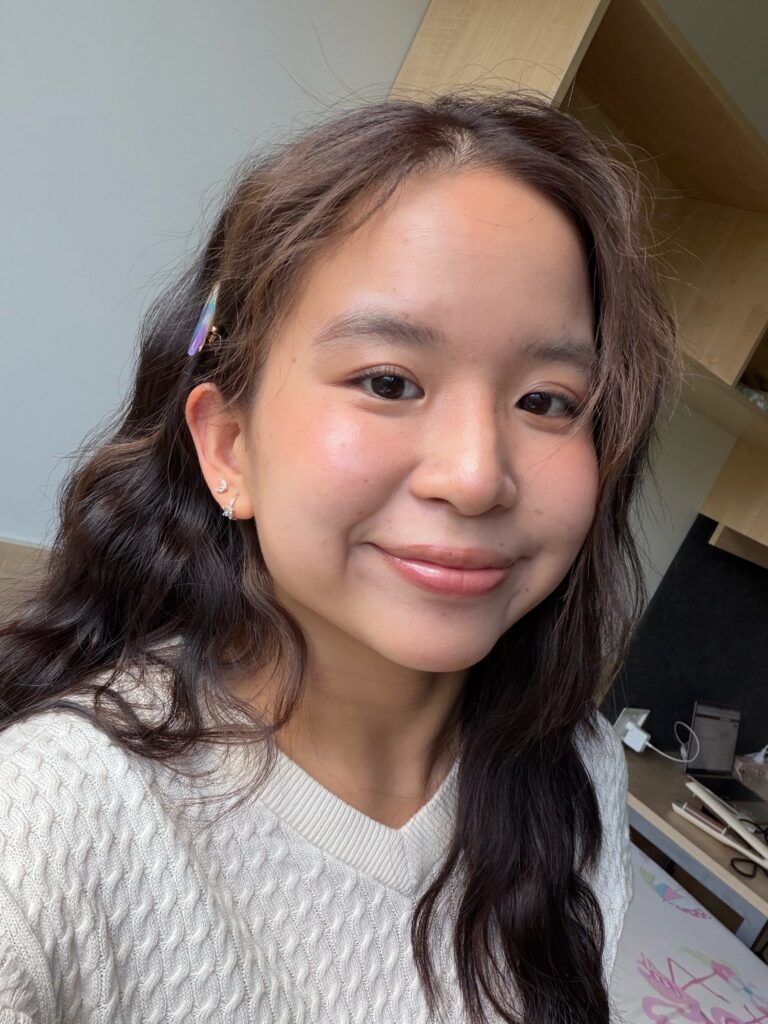
Top photo – Pictured: Veralyn Chong Li Yi, Source: LinkedIn/Veralyn Chong Li Yi