

The accusation that women are merely ‘whingeing’ about their workplace experiences has long been a tool of dismissal – a well honed mechanism for keeping structural inequality comfortably intact. It’s both a weapon and a barricade, custom-built to ensure we don’t get that mythical ‘fair go’ we’re so often patronisingly promised.
‘If you have a go, you’ll get a go,’ proclaimed former prime minister Scott Morrison – a phrase so smugly optimistic it sounds as if it belongs on a novelty mug in a bureaucrat’s gift shop. Rich, too, coming from a man who didn’t just ‘have a go’ but quietly pocketed five ministerial portfolios like a corporate raider under the cover of night.
It was less meritocracy and more Monopoly – only Morrison was the banker, the property owner and somehow also the thimble, which was thankfully booted from the board game in 2017, with Morrison following suit a few years later. If Morrison’s idea of a ‘fair go’ was the challenge, labour lawyer Jessica Miscamble’s (nee Heron) work – which focuses on laws and disputes related to employment and unions – is the counterpunch. She’s calmly pulling apart the myth that women’s complaints are just that – complaints – rather than signs of a deeply sexist system stacked against them.
I was eager to meet the Brisbane-based lawyer I’d been watching and admiring from afar.
When we finally speak, Miscamble is on maternity leave – a fitting detail, because of course she’s still fixing industrial law while caring for a newborn. We spend a long, reflective Saturday morning talking.
Her tone is calm and composed, tinged with the dry, weary knowingness of someone who’s been told one too many times to stop rocking the boat and just be grateful it floats.
‘Women are suffering significantly more than men in the work place in terms of their bodies, and this is due to things outside of their control, from endometriosis to menopause. Women carry the challenge of having a reproductive body, and all that entails, yet are still expected to compete equally in the labour market,’ she explains.
‘Australian labour law was written by men, for men, at a time when women were largely excluded from paid work,’ she continues. ‘Today women make up roughly half of the labour market, yet workplace laws still remain fundamentally shaped around the “ideal worker”, who is male. This doesn’t reflect the average woman’s physiological realities, from menstruation and pregnancy to perimenopause and menopause; women’s working lives are rarely accommodated within conventional hours, expectations and structures.’
So Miscamble set out to change this. As a side project – yes, a side project – to her full-time job at a major law firm, she began advocating for menstrual leave to be embedded in legislation, because the brutal reality was etched into women’s bodies.
‘There was the nurse who’d bleed so heavily she’d faint at work. The junior doctor whose pain was so bad she would spew between seeing patients. The train driver with endo who needed opioid analgesics to manage the pain but wasn’t allowed to take them on shift so had to keep taking days off each month,’ Miscamble shares.
She doesn’t have your typical origin story. She struggled with the structured learning environment of school.
‘I left school early because I learned best outside of conventional boundaries. I was often told I wasn’t meeting my potential, yet the system couldn’t see how differently I learned. Stepping away when I did gave me room to grow,’ she says.
She dropped out of high school at 14 and became a hairdresser, and only studied law in the second half of her twenties. ‘I came to it late,’ she tells me with the pragmatic confidence of someone who knows exactly what she’s doing now that she’s arrived.
‘I’ve actually avoided bringing up my own experience too much because I think it’s more powerful to focus on the collective. When I was younger and new to work, I assumed severe period pain was simply something to endure as a woman. It wasn’t until later that I understood it wasn’t normal.’
The point wasn’t to centre herself – it was to centre a problem the public didn’t yet seem to be aware of.
Miscamble explains that, given women usually bear the brunt of family responsibilities, often working flexible hours or taking carer’s leave to accommodate day care, school hours, sick children or parents, they shouldn’t have to deplete their personal leave further if they regularly experience debilitating pain.
‘It was 2022 and my initial focus was menstrual leave, and I pitched the idea to leaders of unions that I regularly work with, and five of the biggest unions in the country got on board straight away,’ she says.
Miscamble’s initial idea was to get women 12 days of menstrual leave per year – one day a month – on top of existing leave to use if they struggled to work due to excruciating symptoms.
‘Sure, it’s good that women have been able to join the workforce, but we’ve joined a workforce that doesn’t accommodate us. It doesn’t suit the way our bodies are working throughout their reproductive journeys.’
Behind the scenes, Miscamble worked to bring a diverse coalition of supporters together. By late 2022, her goal, which now had the backing of major unions, was on the front page of the Australian, with a call for working women to complete a survey about their experiences.
Credit where it’s due – the Australian article wasn’t the typical alarmist piece you might expect from Murdoch’s stable. Instead, it highlighted that Spain had approved menstrual leave the same year, ‘with women able to access at least three days a month’.34 Japan, Indonesia, South Korea, China and Taiwan were also already on board at the time, with varying entitlements. Progress of sorts.
‘That story led to a crazy amount of coverage – every outlet in Australia was reporting that unions were supporting this radical idea of menstrual leave and were going to start surveying all of these workers to find out how much pain women are in and if they need extra days off. It got the attention that we hoped for.’
Less interested in completing a survey than in rage commenting, the Australian’s readership provided a lot of feedback, though not the kind Miscamble was after.
‘I remember that article got 1111 comments, and they were so brutal. It was a good way to see what my opposition was thinking, and they were saying things like “They want a seat at the table [but] now they’re asking to paint it pink” and other really offensive things that you’d expect.
‘It was very much Oh, here we go – women being whingers again when they don’t have it any harder than men. Some of the most cutting comments were from women from older generations who were basically saying the new generation of women are just whingers, which I didn’t love.’
More than 5000 women responded to the survey.35 Three quarters reported experiencing painful periods, yet the same group felt they couldn’t comfortably discuss taking leave for menstrual pain with their managers. Meanwhile, nearly 80 per cent of respondents said they’d take menstrual leave if it were available.36 I’m no statistician, but it’s pretty clear to me that the need is real.
The survey also revealed it wasn’t just menstruation making things tougher for women in the workplace – menopause, IVF treatment and chronic conditions such as endometriosis and polycystic ovary syndrome were also posing challenges.
‘I also learned that menopause symptoms sometimes had worse outcomes than menstruation for many female workers, as they were cited in the surveys as being a contributor to women considering early retirement. This means we may lose highly experienced workers due to unaccommodating workplace laws,’ Miscamble says.
She explains that unions were eager to broaden the campaign to include reproductive leave at all stages of women’s lives, which she supported. Surprisingly, some of the fiercest resistance came not from men but from women in senior leadership roles who had perhaps internalised the notion that it was best to keep quiet about their own experiences to avoid upsetting the seating chart.
‘I was shocked at first, but it follows a trend. From the research we’ve looked at, many women don’t want to talk about these issues – even those in positions of power – because it reminds people that they’re women, and they fear blowback or getting ruled out for that promotion.’ Some of the comments beneath the Australian article trickled into union boardrooms. What about men? Were they entitled to similar leave if they were getting a vasectomy? Though it’s ordinarily a one-off procedure with a few days of recovery, it is to stop reproduction.37
‘There was initial division on this point but ultimately the Australian Council of Trade Unions called for reproductive leave to be included in national legislation,’ Miscamble says.
In mid-2023, she was working late into the evenings and through weekends, hoping to get her home state to lead the way with reproductive leave.
‘I contacted [then-Premier] Annastacia Palaszczuk’s chief of staff after meeting them at an event, and I let them know that [then-Victorian Premier] Dan Andrews was considering bringing in reproductive leave. It’s true that he was, and I said, “This is an opportunity for [Palaszczuk] as a female premier to be the face of this landmark move to help women.”’
Miscamble concluded the conversation by advising the staffer that a journalist was writing an update on the campaign that week and would call her in the event the Premier’s office wanted to provide any comment, and left it at that.
The following week the Australian published this headline: ‘Annastacia Palaszczuk supports push for reproductive leave’.38 The premier was on board, and reproductive leave was on its way to becoming enshrined in state law.
‘We’ve got the first win,’ Miscamble tells me. ‘But it’s just the first.’ Queensland introduced ten days of paid reproductive health leave for public sector workers from 30 September 2024, and has called on the private sector to voluntarily follow suit.39
Miscamble is aware of less than a handful of private organisations that have done so – the vast majority have simply ignored reproductive leave. Apparently the same employers who encourage women to ‘bring their whole selves to work’ draw the line at their uteruses.
‘I just need to make sure I keep doing this. My goal is to get national legislation in the Fair Work Act in the next four years,’ Miscamble says.
‘Working on this particular topic and legislation has just really opened my eyes to how unfair things are for women, but also to what a raw deal they generally get when they start working.
‘I don’t regret dropping out of school after Year 9, because the education system at the time just wasn’t working for me and I wasn’t engaged, but I am so glad I came to the law, because once I’ve seen an injustice, once I’ve found it, I can’t unsee it.’
Some may call Miscamble’s work whingeing, and that’s their prerogative. But to me it looks and sounds an awful lot like leadership, and winning.
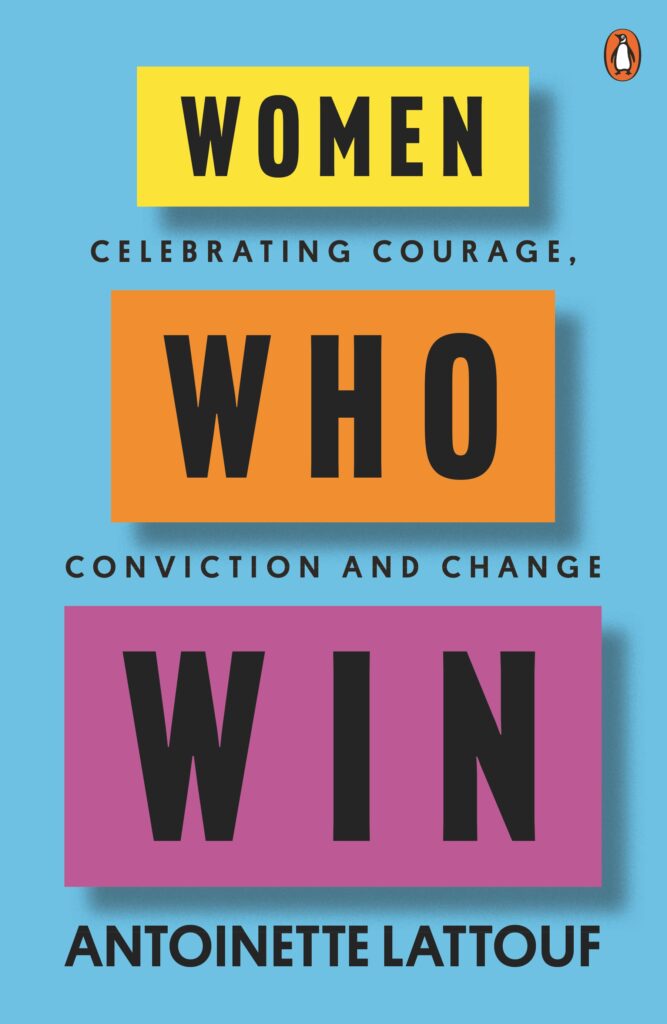
This is an edited extract from Women Who Win by Antoinette Lattouf (Penguin Random House, $36.99), out now.