


The news of an Asian-specific category at the 2027 Grammys has continued to fuel widespread debate almost a week since it was announced. Last week, the Recording Academy of the United States announced the ‘Best Asian Pop Music Performance’ category, which recognises “artistic excellence in Asian pop music performances originating from or widely recognised within Asian markets, including but not limited to K-pop, J-pop and C-pop, with meaningful use of one or more Asian languages”.
It’s one of five new Grammys categories alongside Best Latin Song, Best R&B Collaboration or Duo/Group Performance, Best Traditional Pop Vocal Performance, and Best Traditional Folk Album.
With the chart-topping success of acts like BTS, Blackpink, and also films such as Kpop Demon Hunters, this category’s arrival comes at a time when Asian entertainment is dominating cultural headlines. Yet, its popularity is nothing new. So, why now?
“Fans have spent years advocating for these artists, and the artists themselves have done the hard work – breaking records, selling out stadiums, and building global communities that cross language and cultural barriers,” says entertainment journalist Isha Bassi.
“As someone who’s covered K-pop professionally and watched its global rise in real time, it’s fascinating to see institutions like the Grammys finally responding to a movement that fans have been championing for years.”
Grammys CEO Harvey Mason jr. said in a statement last week that “with more categories, we can represent more music creators, artists, writers, and producers, and it gives us a great opportunity to be more inclusive”.
On the surface, this award category seems like a great step for representation. As someone with Filipino, Vietnamese and Indian heritage who loves Asian music, I initially viewed it as a great step for inclusion. But on a deeper level, it sparks questions around tokenism, and whether specifying race does more harm than good in the plight to champion greater cultural diversity.
Start with the wording for instance, where the exclusion of Southeast and South Asian countries already feels very telling. It raises questions about who gets to represent Asia on a global stage. Asia is home to an enormous range of musical traditions and contemporary pop industries, from India’s thriving music scene to the rapidly growing industries in Thailand, Indonesia and the Philippines. By mentioning – and therefore focusing largely on – K-pop, J-pop and C-pop, the category risks reinforcing a narrow Western understanding of Asian music, rather than celebrating the continent’s diversity.
“These three in particular are what I consider to be the ‘Palatable-East’ to the majority of the Western mainstream. Korean, Japanese, and recently Chinese culture have always been viewed under a lens of exoticism or taken for at the aestheticised value only,’ says Asian Australian musician Joshua So, aka Juniper Care.
As an independent artist, he says the new award category is rather insignificant.
“The Grammys at large, much like other mainstream awards ceremonies, mean nothing to me as an artist who could not care less about commercial meritocracy.”
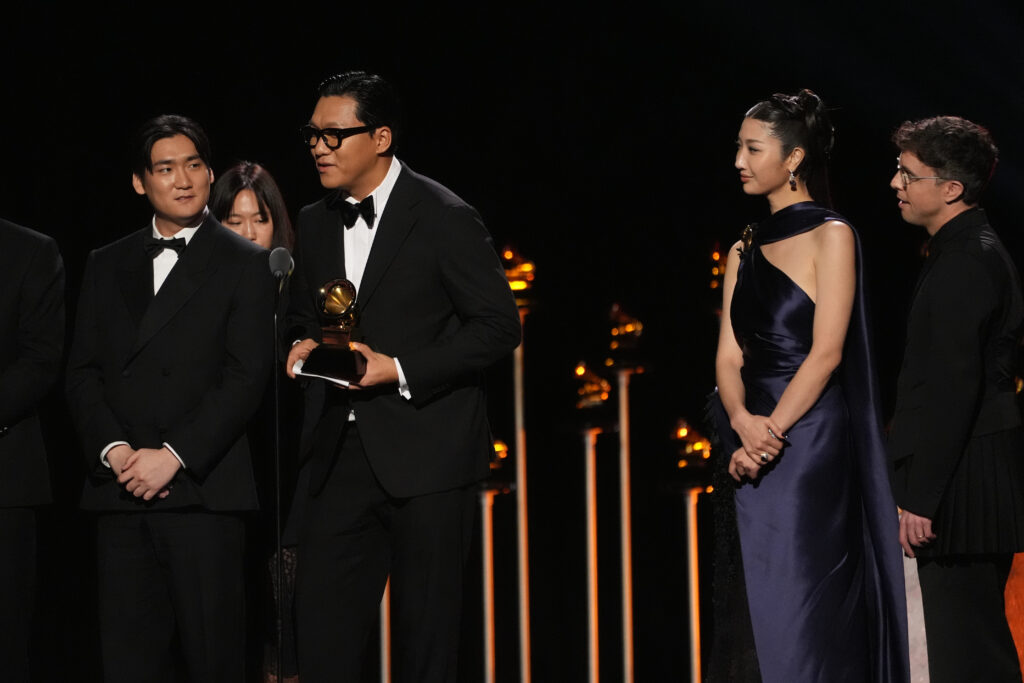
Earlier this year, the song ‘Golden’ from KPop Demon Hunters became the first K-Pop song to win a Grammy, landing the Best Song Written for Visual Media award. While BTS and Rosé from BLACKPINK have been nominated in the past, they’re yet to take home a trophy. Now, a new category supposedly gives these artists more of a chance of winning, but above all, it can be seen as segregation and not authentic inclusion.
“The more I thought about this new category, the more conflicted I became. On paper, it looks like progress. In practice, it feels like the Grammys are saying, ‘We hear you, but we’d still rather you stay in your lane,’” Bassi says.
Meanwhile, SBS PopAsia presenter Andy Trieu says: “A dedicated category can help shine a light on Asian pop, especially for artists who might otherwise be overlooked. But the bigger goal should be seeing more Asian artists recognised in the main categories as well. At the end of the day, great music is great music. If an Asian artist has made one of the best songs of the year, they should be standing alongside everyone else.”
This new category centres whiteness, as the Grammys always have. The Grammys have long faced criticism for favouring Western artists, and while genre-specific and regional categories already exist, questions remain about whether these awards genuinely elevate artists or limit their recognition in the major categories.
Think back to 2020, when Tyler the creator won the award for Best Rap Album. Backstage, he highlighted that “guys that look like me” were consistently placed in rap and urban categories. “It sucks that whenever we – and I mean guys that look like me – do anything that’s genre-bending or that’s anything, they always put it in a rap or urban category…” he said. “When I hear that, I’m just like, ‘Why can’t we be in pop?’ Half of me feels like the rap nomination was just a backhanded compliment. Like, my little cousin wants to play the game. Let’s give him the unplugged controller so he can shut up and feel good about it.”
The new category similarly tokenises Asians, suggesting that Asian artists aren’t good enough for the original categories.
Ultimately, the Grammys must ask itself: is authentic representation about creating separate spaces, or ensuring artists can compete equally in existing ones? While the category may provide overdue recognition, its success will depend on whether it becomes a bridge to greater inclusion, or simply another way of keeping Asian artists on the sidelines.